Glucosamine for Dogs: A Nigerian Pet Owner's Guide

Glucosamine is probably the single most recognized name in dog joint care — but it's also one of the most misunderstood, mostly because it rarely does its job alone and its sourcing and form vary more than most labels make clear. This guide covers what glucosamine actually is, why it's almost never sold by itself, and what to check before choosing a glucosamine supplement in Nigeria.
What glucosamine actually is
Glucosamine is a naturally occurring compound found in and around joint cartilage. In supplement form, it's most commonly available as glucosamine HCl, frequently sourced from shellfish, and included in nutritional formulas designed to support joint health and mobility.
It's worth being precise about the language here: glucosamine supplements are formulated to support joint health as part of a nutritional routine — they aren't a treatment for a diagnosed joint condition, and any product claiming otherwise is overstating what the ingredient does.
Glucosamine HCl vs. glucosamine sulfate
Two forms show up most often on labels. Glucosamine HCl is generally shellfish-derived and is the more commonly used form in dog-specific joint formulas. Glucosamine sulfate is another widely used form, sometimes paired with a stabilizing mineral. Neither form is inherently "better" in a way that should override everything else on the label — what matters more practically is the amount per serving and what it's paired with, covered below.
Why it's almost never sold alone
If you look closely at well-formulated joint products, glucosamine is rarely the only active ingredient. It's most commonly paired with:
- Chondroitin sulfate, which is included alongside glucosamine in the large majority of nutritional joint-support formulas.
- MSM, which frequently rounds out the combination in multi-ingredient systems.
This pairing is common enough that a product listing glucosamine on its own — without chondroitin or MSM — is worth a second look before buying, not because it's necessarily ineffective, but because it's an incomplete version of what's typically formulated together. Our broader joint supplement guide covers why this specific trio is used so consistently.
What to check on a glucosamine supplement label
- The amount per serving, in milligrams, not just its presence on the ingredient list.
- The source — shellfish-derived glucosamine HCl is the most common form used in dog supplements.
- What it's paired with — chondroitin and MSM, ideally, rather than glucosamine in isolation.
- Serving frequency — daily consistency matters more for nutritional joint support than occasional or "as needed" use.
- Storage conditions, since supplement quality can degrade with poor storage over time, particularly relevant for products that have traveled through longer import chains.
Why dosing amount matters more than the brand name
Two glucosamine products can list the exact same ingredient and differ enormously in how much is actually in each serving. This is the single biggest source of confusion when comparing joint supplements, because the ingredient list alone looks identical either way. A product formulated with a meaningful amount per serving and one formulated with a token amount can sit side by side on a shelf with nearly the same label copy. The only way to tell them apart is checking the milligram amount directly, which is why this guide keeps returning to that same point — it's genuinely the most useful single habit for evaluating this category.
Introducing glucosamine into your dog's routine
Most nutritional joint-support products, including glucosamine-based ones, are formulated to be given daily as part of a consistent routine rather than occasionally. When starting a new supplement, it's reasonable to introduce it gradually and keep an eye on how your dog responds over the first week or two, the same way you would with any new addition to their diet. If your dog is already on another supplement or medication, check with your veterinarian about whether a glucosamine-based product is appropriate to add, rather than assuming it's automatically fine to stack.
Where glucosamine naturally comes from
Beyond supplements, glucosamine occurs naturally in connective tissue and cartilage, which is part of why shellfish shells (a byproduct of cartilage-rich material) became a practical commercial source for supplement manufacturing. This is background context rather than a reason to source it from diet alone — the concentrations found in typical whole foods aren't comparable to a properly dosed supplement, which is why supplementation exists as a category in the first place.
Where to find it in Nigeria
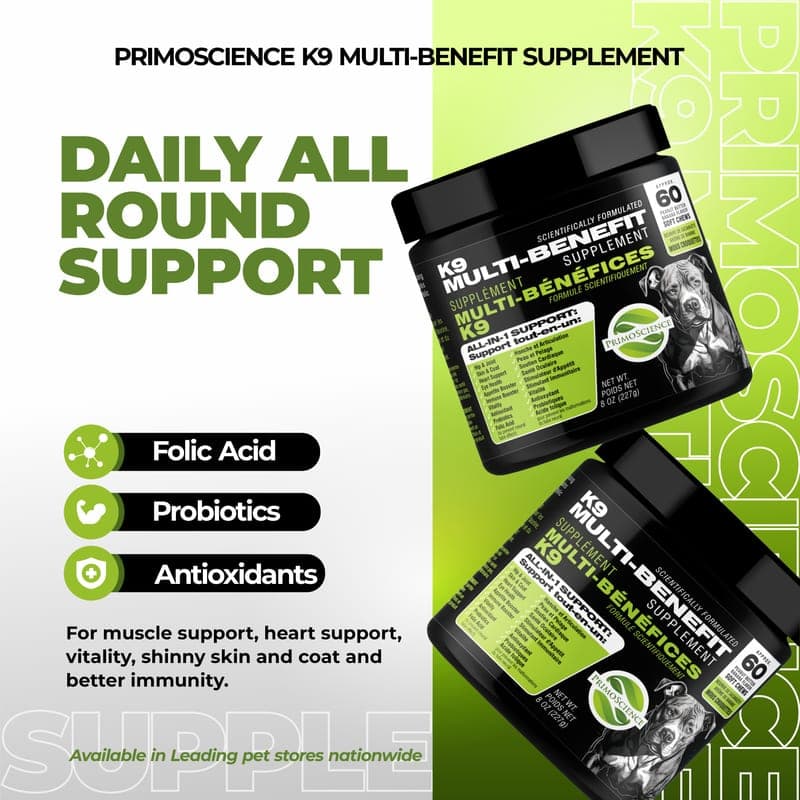
PrimoScience K9 Multi-Benefit Supplement includes 200mg of glucosamine HCl from shellfish per soft chew, paired with 100mg chondroitin sulfate and 100mg MSM — the full joint-support combination rather than glucosamine alone — plus wild Alaskan salmon oil, a probiotic blend, and a full spread of vitamins in the same daily chew. See our broader guide to choosing a dog joint supplement in Nigeria for more on how to evaluate joint formulas generally.
If your dog has a shellfish sensitivity or a diagnosed joint condition, check with your veterinarian before starting any new supplement — this article is general information, not veterinary advice for your specific dog.
View the full product facts panel to see exact amounts before you buy.
Frequently asked questions
Glucosamine is broadly well tolerated across breeds as a nutritional ingredient, but individual sensitivities and existing health conditions vary. If your dog has a known allergy (particularly shellfish, given how most glucosamine HCl is sourced) or an existing health condition, check with your veterinarian before starting.
Both are common forms used in supplements. Glucosamine HCl is typically shellfish-derived and is the more common form in dog joint supplements; glucosamine sulfate is another widely used form. Labels should specify which form and how much is included per serving — that specificity matters more than the brand name on the jar.
Daily use is how glucosamine-based joint supplements are generally formulated to be given, since nutritional joint support works cumulatively rather than as an occasional dose. Follow the serving instructions on your specific product's packaging.
Not necessarily — if your dog has a known or suspected shellfish sensitivity, this is worth discussing with your veterinarian before starting a shellfish-derived glucosamine product specifically.
No single dose is going to produce a noticeable change. Glucosamine is a nutritional ingredient that's part of a cumulative daily routine, not something with an instant effect, and any product implying otherwise is overstating what the ingredient does.
Ready to support your dog's daily wellness?
PrimoScience K9 Multi-Benefit Supplement — one daily chew for joints, digestion, skin & coat, and everyday nutrition.